When most people think of tree removal, they imagine someone with a chainsaw cutting down a tree and hauling it away. But in reality, professional tree removal is a complex and carefully coordinated process that requires skill, equipment, and safety protocols to ensure the job is done correctly.
At ArborWise Tree Management, tree removal isn’t just about cutting a tree down, it’s about assessing risk, protecting surrounding property, and preserving the long-term health of the landscape. Whether it’s a dead tree threatening your home or a large tree that needs to be removed to make way for construction, understanding what tree removal includes can help you make informed decisions.
1. Initial Assessment and Consultation
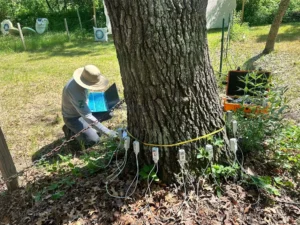
Every tree removal begins with a professional assessment by a certified arborist. The arborist evaluates the tree’s condition, location, and the potential hazards involved in removing it.
Key aspects of this assessment include:
- Tree health: Determining if the tree can be saved through pruning or treatment instead of removal.
- Structural integrity: Checking for decay, cracks, or diseases that make the tree unstable.
- Surrounding environment: Considering nearby structures, utility lines, fences, or landscaping features that may be affected.
- Access and equipment needs: Determining whether a crane, bucket truck, or climbing crew is required based on site conditions.
This step ensures that the tree removal plan prioritizes safety and efficiency while minimizing damage to the property.
2. Permitting and Compliance
In many cities and counties, including parts of Rochester, MN, and surrounding communities, tree removal may require a permit or approval if the tree is on public property, within an easement, or exceeds a certain size.
A professional tree service will help guide you through local regulations and, if needed, assist with obtaining the necessary permits. This not only ensures compliance but also protects you from fines or liability.
3. Preparation and Safety Setup
Before a single cut is made, the crew prepares the worksite. Safety is always the top priority.
Common preparation steps include:
- Clearing the area of vehicles, furniture, and personal items.
- Marking safety zones to keep people and pets away.
- Inspecting weather conditions to ensure wind and moisture levels are safe for climbing or equipment use.
- Setting up rigging and drop zones to control the direction of falling branches or sections.
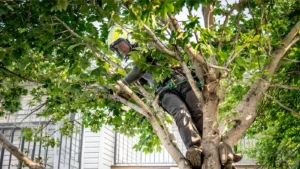
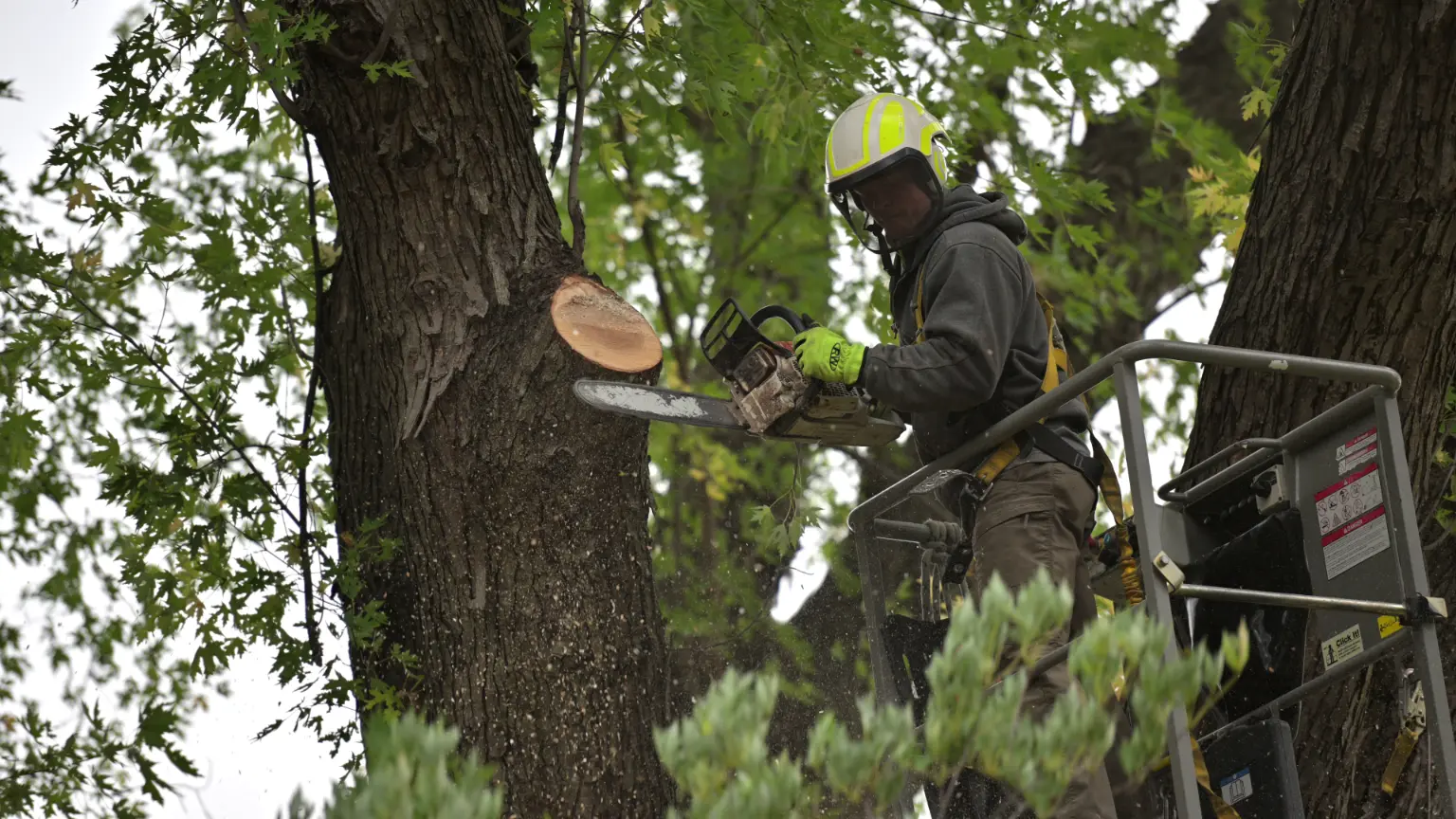
Depending on the tree’s height, location, and health, the crew may choose to climb the tree manually, use bucket lifts, or employ a crane-assisted removal system for large or hazardous trees.
4. Step-by-Step Tree Removal Process
Once the site is secure, the crew begins the removal process. While every project is different, the general steps often include:
a. Limb Removal (Limbing)
Branches are carefully cut and lowered to the ground one section at a time using ropes or rigging systems. This controlled process reduces the risk of property damage.
b. Trunk Sectioning
After the canopy is cleared, the main trunk is cut into sections. Each piece is lowered or guided to a designated drop zone. For large or leaning trees, crane-assisted removal ensures maximum safety and precision.
c. Debris and Brush Removal
All branches, twigs, and foliage are gathered and either chipped on-site using a wood chipper or hauled away for recycling. Some homeowners choose to keep wood chips for landscaping mulch.
d. Large Wood Handling
Trunk sections are cut into manageable sizes for firewood, milling, or disposal. Professional crews use specialized loaders or cranes to move heavy pieces safely.
5. Stump Removal or Grinding
Tree removal usually ends with stump grinding, which eliminates the remaining base of the tree below ground level. Leaving a stump can lead to several problems, including:
- Pest infestations (termites, ants, or beetles)
- Fungal growth or disease spread
- Tripping hazards and unsightly yard obstacles
Stump grinding ensures that roots no longer pose a problem and the area can be re-landscaped or replanted.
At ArborWise, we grind stumps to a depth that allows for healthy regrowth of grass, plants, or new trees, without disrupting the soil ecosystem.
6. Site Cleanup and Restoration
A reputable tree service always leaves the property clean and safe. After the tree and stump are removed, crews rake, sweep, and remove debris. Some clients choose to have the area reseeded, mulched, or prepared for future planting.
The goal is to restore the area so that it looks natural, almost as if the tree was never there.
7. Optional Services After Tree Removal
Tree removal often opens the door to additional landscape improvements. Many homeowners take this opportunity to invest in:
- Tree planting: Selecting the right species for your yard’s soil and sunlight conditions.
- Soil restoration: Using compost and mulch to replenish nutrients.
- Pruning and health care: Ensuring nearby trees remain strong and balanced.
- Risk assessments: Evaluating other trees on the property to prevent future hazards.
ArborWise offers holistic tree management services designed to maintain your landscape’s long-term health after any removal project.
8. Why Hire Professionals for Tree Removal
Tree removal might seem straightforward, but it is one of the most dangerous aspects of tree care. According to the Tree Care Industry Association (TCIA), hundreds of injuries occur annually from untrained individuals attempting tree removals.
Professional crews have the training, insurance, and equipment to:
- Work safely around power lines and tight spaces.
- Use rigging systems to prevent damage.
- Manage the physics of tree weight distribution.
- Protect property and ensure compliance with local laws.
Attempting a do-it-yourself tree removal can lead to costly damage—or serious injury.
9. The ArborWise Approach
At ArborWise Tree Management, every tree removal is performed with precision and respect for the environment. Our ISA Certified Arborists use a science-based approach that balances safety, environmental care, and client goals.
We specialize in:
- Crane-assisted removals for large or hazardous trees
- Climbing removals in limited-access areas
- Stump grinding and restoration for complete site cleanup
- Consultation and risk assessment to determine the best solutions for your landscape
Our team’s commitment goes beyond removal—we strive to restore balance and promote the long-term health of your property’s ecosystem.
Conclusion
Tree removal is more than just cutting down a tree, it’s a multi-step process that involves evaluation, planning, safety, and precision. From the first consultation to final cleanup, each stage ensures that your property remains protected and your landscape’s health is maintained.
Whether you need to remove a storm-damaged oak or make room for new construction, partnering with a certified tree care company like ArborWise Tree Management guarantees peace of mind and lasting results.
If you’re looking for expert tree removal services in Rochester, MN, contact ArborWise today to schedule your consultation.