When it comes to tree care, the way a tree grows in a forest versus in an urban environment can be strikingly different. Understanding these differences while applying juvenile pruning techniques is essential for ensuring tree health, safety, and longevity.
Forest vs. Urban Growth: Why Trees Develop Differently
In forest settings, trees naturally develop tall, straight trunks with strong branch unions and wide branching angles. This is because competition for sunlight forces young trees to shed shaded juvenile branches. Over time, this process creates a robust structure that supports long-term health.
Urban trees, however, don’t have the same competitive pressures. They are often planted in open turf areas with continuous light exposure. As a result, they tend to develop:
- Multiple competing stems
- Tight branch clusters near the base
- Weak branch attachments
This disrupted growth habit makes urban trees more vulnerable to defects, instability, and failure without proper management.
What Is Juvenile Pruning?
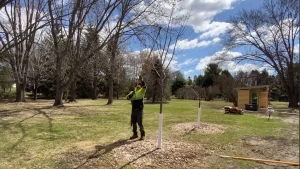
Juvenile pruning is the practice of selectively removing branches while a tree is still young. This process encourages:
- A strong central leader
- Well-spaced branches
- A stable, resilient framework
By intervening early, arborists can mimic the natural pruning process of the forest, preventing costly structural issues later in the tree’s life.
Why is Juvenile Pruning Important?
Left unmanaged, juvenile limbs often lead to multiple weak stems that lean away from the base as they grow heavier. This can cause:
- Hazardous weak unions and stem failure
- Clearance problems with nearby structures
- The need for large corrective cuts on mature trees, which often leads to decay
In contrast, juvenile pruning minimizes the size of pruning wounds, reduces decay risk, and supports long-term tree strength. Many U.S. municipalities even require a credentialed arborist for pruning work, since improper cuts are a leading cause of tree failure.
What are the Long-Term Benefits of Juvenile Pruning?
When performed by a certified arborist, cyclical juvenile pruning:
- Extends tree lifespan
- Enhances resistance to decay and failure
- Reduces long-term maintenance costs
- Ensures trees reach their full ecological and aesthetic potential
The result is stronger, healthier, and more productive trees that provide lasting environmental benefits at a fraction of the cost of mismanaged trees.
 Final Thoughts from ISA Board Certified Master Arborist, Mitch Hoy
Juvenile pruning isn’t just about shaping young trees. It’s about setting them up for decades of success. By guiding their growth early, we create trees that are safer, healthier, and more resilient for the communities they shade and protect.
Interested in our Pruning Services?
Contact us now or learn more about our pruning services.